Powering innovation
The accurate measurement of kinematics is essential to driving today’s biomechanical research.
Using custom Xsens hardware and software solutions for biomechanical research, scientists worldwide conduct research in rehabilitation, movement analysis, medical and clinical studies, assistive technology development, and performance enhancement.
With Xsens, you get precise biomechanical data, personalized product choice guidance, and support from the dedicated specialist team. Get in touch with Xsens at sales@xsens.com to get a custom evaluation of your research setup and how Xsens products can power your innovation.

Lab-quality data beyond the lab
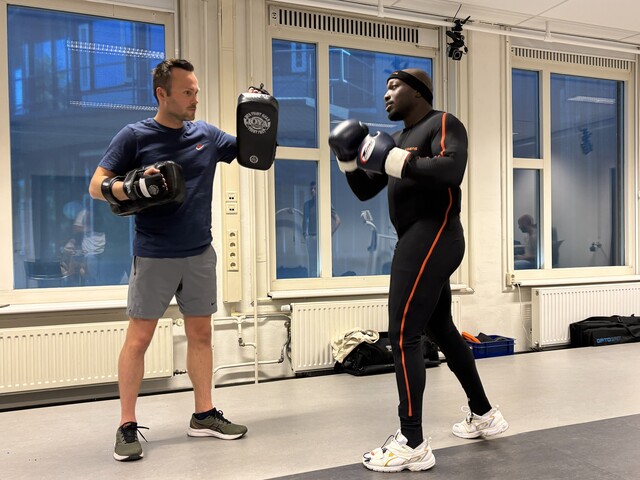
Capture lab-quality kinematic data anywhere: accurate 3D joint angles, segment positions, and detailed body accelerations, all without needing a lab. Measure at the lab, on the sports field, or outdoors, whenever you need.
Our sensor-fusion algorithms maintain high accuracy even in magnetically disturbed environments, and our outputs are regularly validated through peer-reviewed research.

Custom-built research software
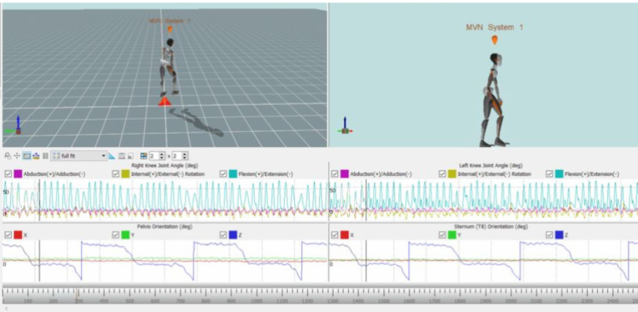
Xsens Analyze provides rich kinematics data for research, including joint angles, segment orientations, range of motion, gait timing, step length, step width, symmetry metrics, and task-specific movement strategies.

Xsens Analyze integrations
Live stream or export your motion capture data seamlessly into your biomechanics, ergonomics, and analysis software packages