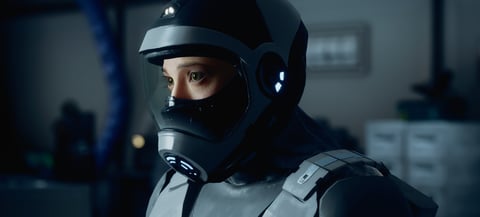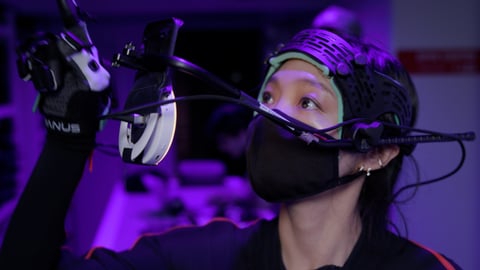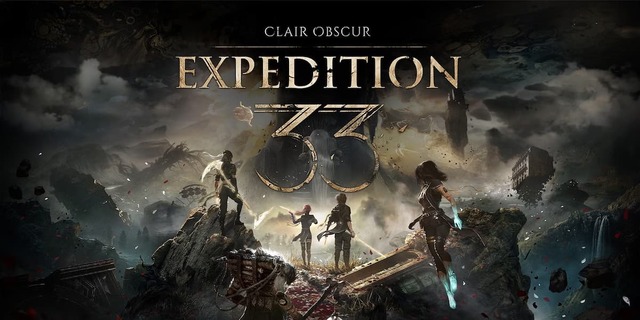
Building a cinematic experience with a small indie team
A small team. A bold creative vision. A game designed to feel like cinema.When Sandfall Interactive began development on Expedition 33, the studio wanted to create an experience where storytelling, atmosphere, and performance would stand at the center of the game. The French indie studio, consisting of around 30 people at the peak of production, aimed to blend cinematic presentation with turn-based gameplay in a way that felt immersive and emotionally grounded.
Rather than treating cinematics as separate moments between gameplay sections, the team wanted the entire experience to feel cohesive. Character movement, subtle performances, camera work, and pacing all needed to support the emotional tone of the story. The ambition was not simply to create cutscenes, but to build scenes that felt closer to film production than traditional in-game cinematics.
As Tristan Fleury, Cinematic Animator at Sandfall Interactive, explains: “We wanted something very similar to cinema. Not a typical video game cinematic, but something that feels like a movie.”
That cinematic ambition became one of the defining creative pillars of the project. At the same time, the reality behind development looked very different from a large AAA production. Sandfall was still a relatively small independent studio, working with limited resources, limited space, and a compact production team.
Many members of the team were also entering motion capture production for the first time. They needed a workflow that would allow them to move quickly, stay flexible, and maintain high production quality without slowing down creativity.
The challenge of producing cinematic-quality animation efficiently
Creating a cinematic game at this scale introduced major production challenges from the start.
The team needed to produce more than four and a half hours of cinematic content while maintaining consistency across character performances and animation quality. For larger studios, this type of production often depends on dedicated optical motion capture stages, extensive capture crews, and highly structured production schedules.
For Sandfall, that approach would have created too much complexity.
The studio needed a motion capture workflow that could fit naturally into an agile indie development environment. Speed and flexibility were critical. The team needed to be able to capture performances quickly, refine animations efficiently, and iterate without constantly blocking production.
William Tomasi, Cinematic Artist at Sandfall Interactive, explains how important speed became throughout development: “We didn’t have a lot of time because we had four and a half hours of cinematics, so we had to be smart and be quick.”
Another challenge was physical space. Traditional motion capture setups often require permanent studio environments and large capture areas. Sandfall did not have the luxury of a dedicated mocap stage. Instead, the team needed something portable and adaptable that could move with production requirements.
On top of that, the cinematic team constantly refined scenes during development. Animations changed, sequences evolved, and additional performances were often needed late in production. A slow or rigid workflow would have made iteration difficult and time-consuming.
The team needed a solution that could support creativity instead of slowing it down.
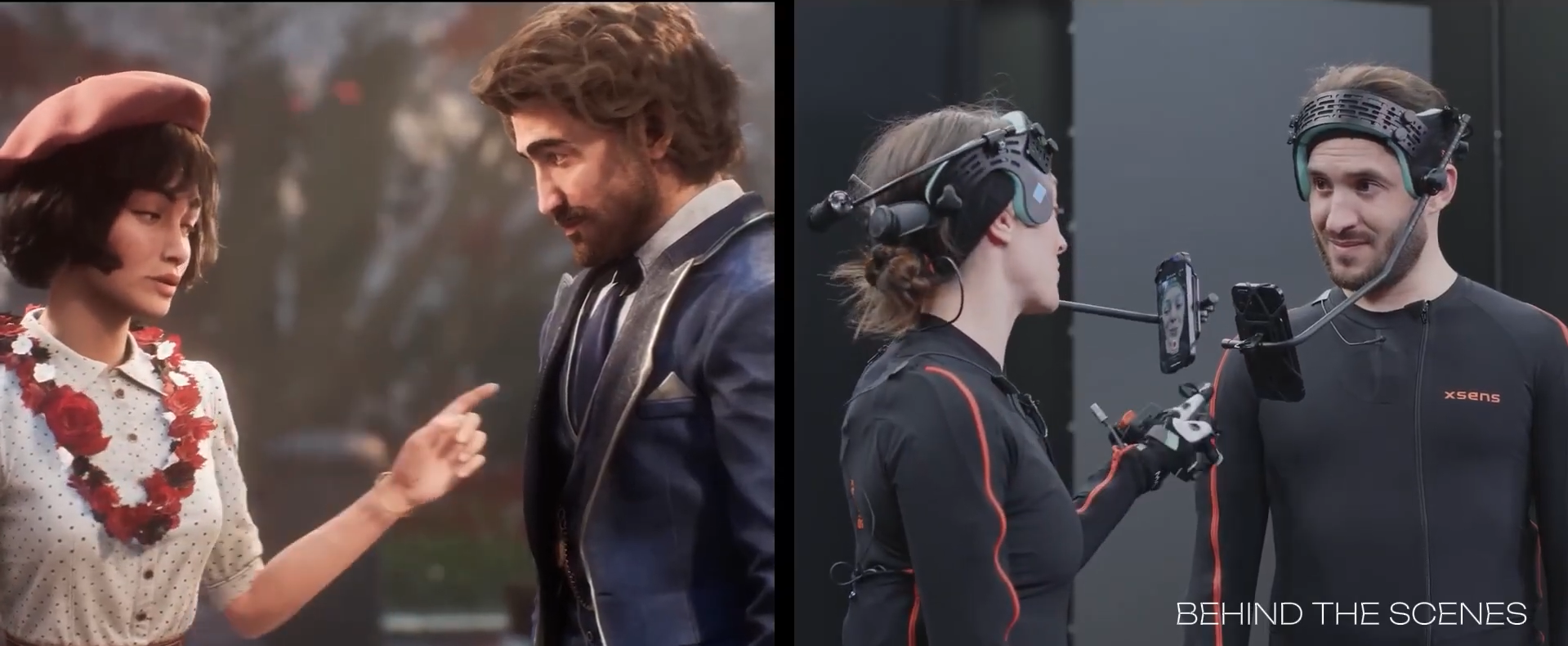
Real performances, transformed into the cinematic characters of Expedition 33 with Xsens motion capture.
How Xsens fit naturally into Sandfall’s workflow
Through the Xsens Indie Program, Sandfall Interactive acquired an Xsens motion capture setup that allowed the studio to start building its cinematic pipeline quickly and efficiently.
For many on the team, working with motion capture was entirely new. Instead of facing a complicated onboarding process or technical barriers, the team was able to begin capturing performances almost immediately.
William recalls how approachable the process felt from the beginning: “He just gave me an Xsens suit and said, ‘Do the cinematics with it.’ It was really easy to get started.”
That accessibility quickly became one of the biggest strengths of the workflow.
Because the Xsens setup was portable, Sandfall could capture motion in multiple environments depending on production needs. The team recorded performances in the office, at home, and in temporary rented spaces, allowing motion capture to remain flexible throughout development.
Instead of building production around the technology, the technology adapted to the production.
Xsens also integrated smoothly into the team’s Unreal Engine pipeline. By using the Xsens presets and a consistent skeleton structure across characters, the team simplified retargeting and reduced technical overhead during production.
As Tristan explains: “It was pretty easy to retarget into our character in Unreal… because we used the same skeleton for all characters.”
The workflow itself was designed around speed and efficiency. After capturing performances, the team processed the data through Xsens software before refining animations directly inside Unreal Engine. This reduced unnecessary switching between tools and allowed the cinematic team to continue working inside the environment where scenes were already being built.
That production speed became especially valuable whenever changes were needed. If the team realized an animation was missing or wanted to improve a sequence, they could quickly capture a new performance themselves instead of waiting for additional shoot days or external resources.
“We just put the suit on ourselves and in maybe one hour we had the animation done,” says William.
For a small team working on a cinematic-heavy game, that ability to iterate rapidly became a major production advantage.
Behind the scenes of Expedition 33, real performances captured with Xsens and transformed into cinematic in-game animation.
From indie ambition to worldwide recognition
By combining a strong artistic vision with a fast and flexible motion capture workflow, Sandfall Interactive was able to create a cinematic experience that resonated with players far beyond the studio’s original expectations.
Expedition 33 became widely recognized for its atmosphere, storytelling, character performances, and cinematic presentation. Despite being developed by a relatively small indie team, the game stood alongside much larger productions in terms of visual quality and emotional impact.
The efficiency of the Xsens workflow allowed the team to focus more time on creative refinement and storytelling instead of technical limitations. Rapid iteration, flexible capture sessions, and smooth Unreal Engine integration helped the team maintain momentum throughout production.
For Sandfall, the response to the game came as a surprise.
As William reflects: “We were proud of what we were doing… but the success was a big surprise for us.”
Looking back, the team believes the combination of passion, creative focus, and accessible technology played an important role in making the project successful.
“If the devs do something that they love, the player will love it,” the Sandfall Interactive team explains.
Sandfall Interactive’s journey demonstrates how smaller studios can achieve cinematic-quality storytelling without relying on massive production infrastructure. With the right tools and workflow, indie teams can move quickly, stay creative, and deliver experiences that compete on a global stage.
Ready to bring cinematic storytelling into your pipeline?
Discover how Xsens helps teams capture high-quality motion, faster.