Virtual motion capture is a broad term used to describe techniques that translate real human movement into digital character animation inside a virtual environment. Depending on context, it can refer to different technologies and workflows, which is where confusion often arises.
In some cases, virtual motion capture describes camera-based systems that use AI and computer vision to estimate body movement from video alone. In other professional production contexts, it refers to motion capture workflows where a performer’s movement is applied directly to a virtual character in real time, regardless of whether the data comes from cameras, wearable sensors, or a combination of both.
What these approaches share is the outcome. Real human motion is captured and immediately drives a digital character in animation software, game engines, or virtual production tools. The difference lies in how that motion data is acquired.
This article explains virtual motion capture in practical terms, clarifies the main approaches used today, and shows where each fits best in modern animation, game development, and virtual production workflows.
Motion capture explained: the main approaches
Motion capture is an umbrella term for technologies that record human movement and translate it into digital animation. Over time, different approaches have emerged, each suited to different workflows and production needs. Understanding these categories helps clarify where virtual motion capture fits.
The most common types of motion capture used today are:
- Optical motion capture, which uses cameras and visual tracking to record movement within a defined capture space
-
Inertial motion capture, which uses wearable sensors to measure movement directly on the performer
-
Vision-based motion capture, which relies on AI and computer vision to estimate motion from standard video
All of these approaches aim to solve the same problem, capturing believable human motion. The difference lies in how the data is captured and how it is used in production.
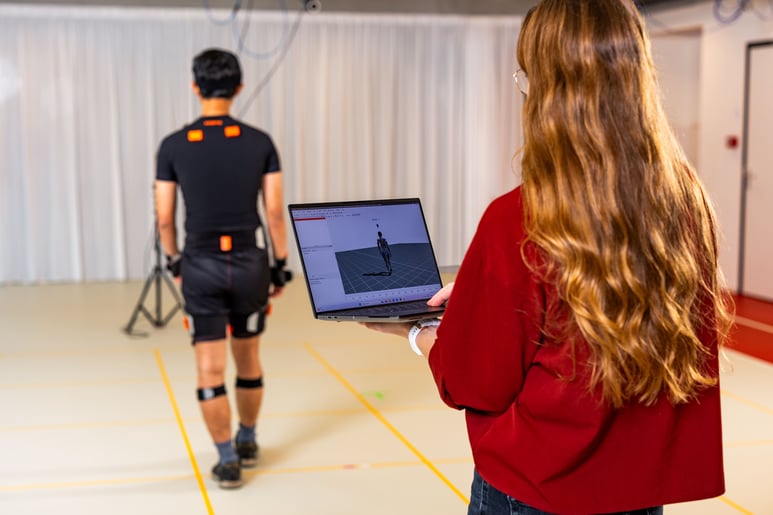 Xsens real-time inertial motion capture.
Where virtual motion capture fits
Virtual motion capture is not a separate capture technology. Instead, it describes a workflow where captured motion is applied directly to a digital character inside a virtual environment, often in real time.
This means virtual motion capture can be powered by different underlying technologies. Camera-based systems, sensor-based systems, or hybrid setups can all be used, as long as the result is a live or near-live digital performance.
This distinction is important. Virtual refers to how and where the motion is used, not necessarily how it is captured.
How virtual motion capture works
Virtual motion capture focuses on capturing real human movement and applying it directly to a digital character inside a virtual environment. The way this motion is captured can vary, but in professional production workflows, it is often powered by inertial motion capture technology.
Inertial motion capture uses small wearable sensors placed on key points of the body. These sensors measure orientation, acceleration, and angular velocity. Software then uses biomechanical models and algorithms to reconstruct full-body movement on a digital skeleton.
A typical virtual motion capture workflow using inertial technology looks like this:
-
The performer wears a motion capture suit with embedded inertial sensors
-
Sensors stream motion data wirelessly to capture software
-
The software reconstructs the performer’s movement on a digital skeleton
-
Motion can be previewed live in a virtual scene or recorded for later use
-
Animation data is sent to game engines or digital content creation tools
Because inertial motion capture does not rely on external cameras, this approach supports flexible capture environments. Performances can be recorded in small spaces, large stages, or on location, while still feeding directly into virtual production and animation workflows.
Virtual motion capture in video games
In game development, virtual motion capture allows teams to capture gameplay animation, combat moves, and character interactions quickly. Animators can test ideas, refine timing, and preview motion directly in engine.
This is particularly valuable for indie and mid-sized studios that need high-quality animation without the overhead of a full optical studio. Virtual mocap helps teams move from concept to playable character faster.
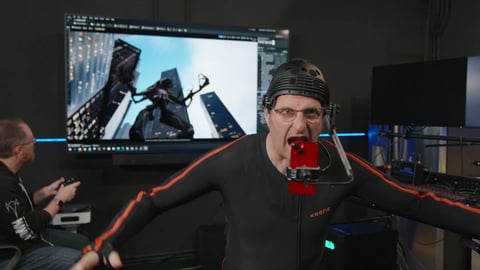
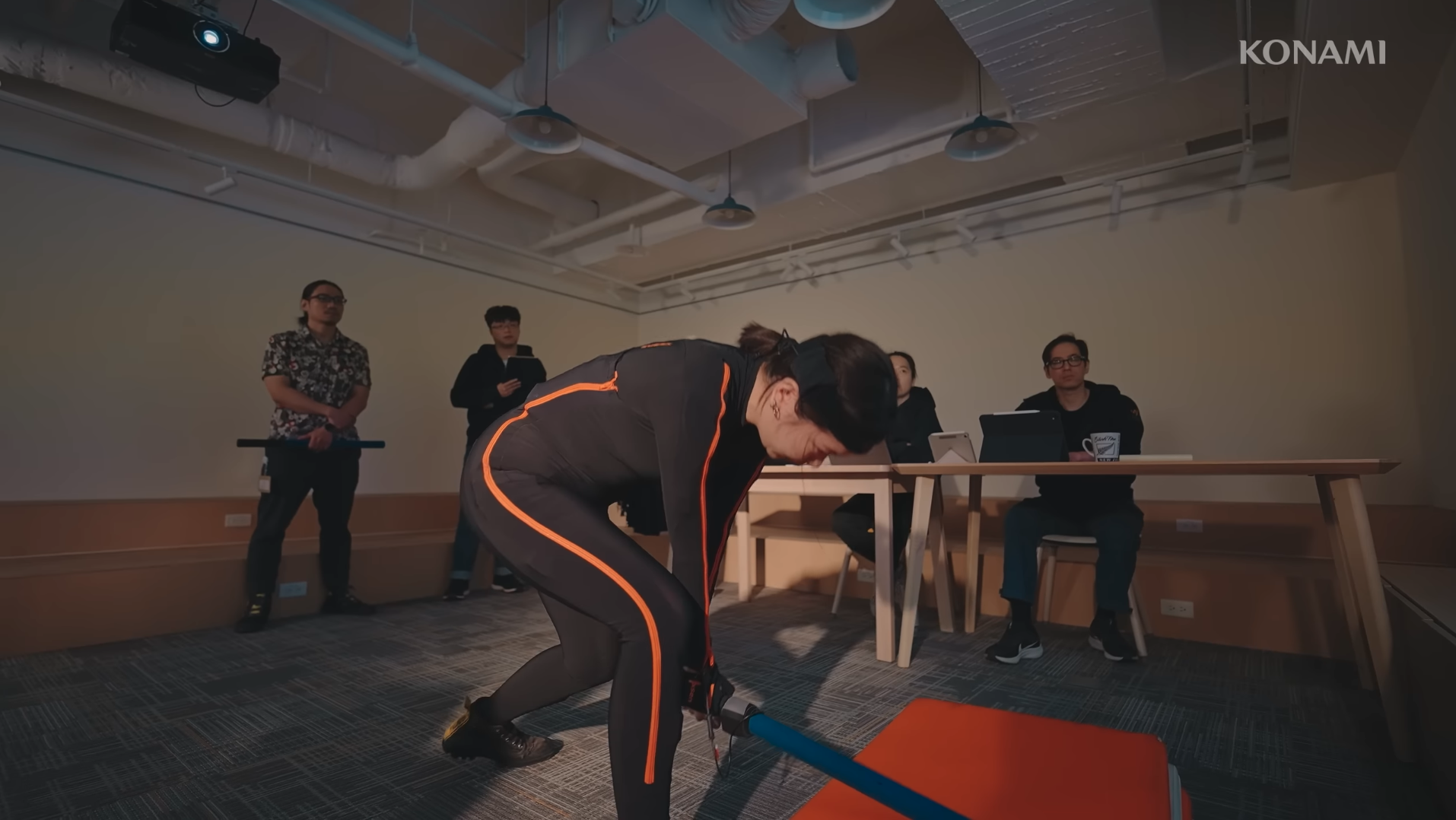 KONAMI capturing in-game character movement using Xsens inertial motion capture for Silent Hill f.
Virtual motion capture for film and virtual production
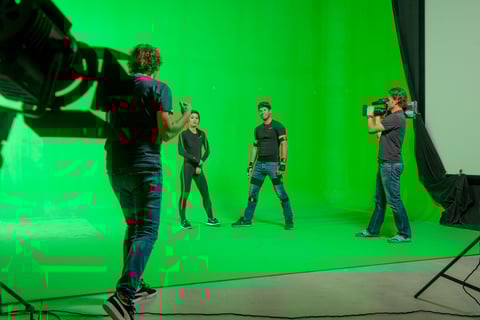
For film, VFX, and virtual production, virtual motion capture is often used for previs, blocking, and real-time visualization. Directors and performers can see digital characters move live on a virtual set, enabling faster creative decisions.
Because virtual motion capture is portable, it can be deployed on sound stages, on location, or alongside LED volumes without disrupting production schedules.
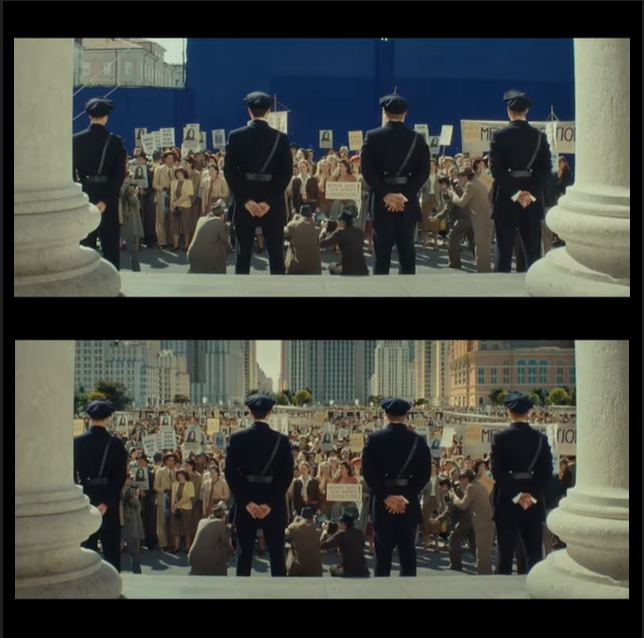 Xsens motion capture VFX for Naples–New York.
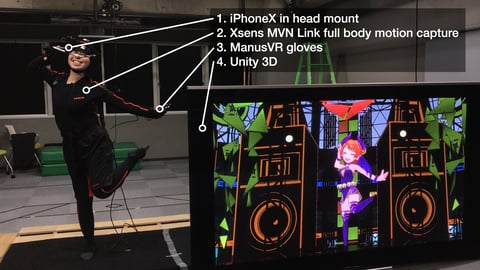
Real-time virtual motion capture
One of the key advantages of virtual motion capture is real-time feedback. Performers and directors can see motion applied instantly to digital characters, which improves performance quality and reduces rework.
Real-time virtual mocap is widely used in:
-
Live virtual performances
-
VTuber streaming
-
Broadcast graphics and augmented reality
-
Interactive experiences
Data quality and cleanup
Modern virtual motion capture systems focus heavily on data quality. Advanced biomechanical models and sensor fusion algorithms produce clean motion data that requires minimal cleanup.
This allows animators to spend less time fixing motion and more time refining performances.
Is virtual motion capture right for your project?
Virtual motion capture is ideal for teams that value speed, flexibility, and real-time workflows. It scales from small indie teams to large studio pipelines and integrates smoothly with existing animation and engine tools.
If your project demands fast iteration, portable capture, and high-quality results, virtual motion capture is a strong fit.
Virtual motion capture with Xsens
Xsens has been a leader in inertial motion capture for decades, trusted by professionals across games, film, and live production. Xsens virtual motion capture solutions are designed to deliver high-quality data with an effortless workflow.
With Xsens, professionals can capture motion anywhere, preview results in real time, and integrate seamlessly into modern animation pipelines.
Explore how virtual motion capture can fit into your workflow, or dive deeper into motion capture for video games and virtual production.
Discover Xsens virtual motion capture solutions.