In occupational health and safety, ergonomic assessment supports decisions that can affect worker well-being, workstation design, productivity, compliance, and cost. As more teams move from manual observation to digital ergonomics assessment, the real question is no longer just whether to measure movement, but how reliable that movement data is for the decisions that follow.
Challenge
Traditional ergonomic methods are increasingly being replaced by motion capture, which provides a more objective, consistent, and repeatable assessment. At the same time, not all motion capture technologies provide the same level of precision, and that difference becomes critical in high-stakes ergonomic analysis.
Solution
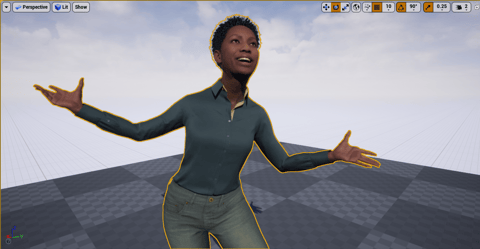
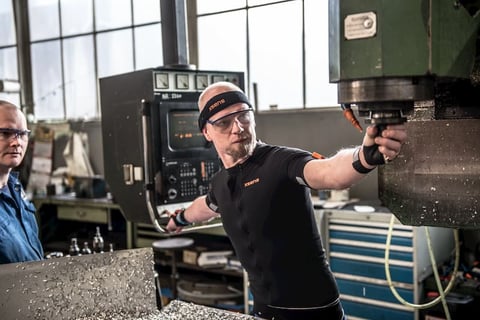
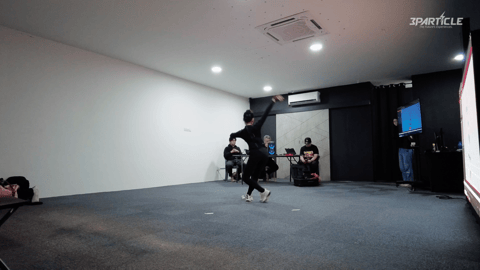
Highly precise motion capture technologies, such as inertial motion capture, provide ergonomic teams with objective, detailed movement data captured in real-world conditions. This enables more accurate assessments, stronger decisions, and integration into custom tools and advanced workflows for teams working in environments where each ergonomic decision can have a significant financial impact.
Key outcomes
- Motion capture offers a more objective, effective, and precise basis for ergonomic assessment than pen-and-paper methods
- Teams gain detailed visibility into posture, action repetition, asymmetry, and exposure across the full task cycle
- Highly precise motion capture captures rich real-world movement data for deeper analysis, more accurate ergonomic assessment, and stronger decision-making in high-stakes environments
Occupational health and safety measures are essential for building a healthy, engaged workforce that is committed to its work and motivated to remain with the company. Comprehensive, actionable ergonomic assessments support decisions that impact worker well-being, workstation design, productivity, compliance, and costs. However, when moving beyond pen-and-paper methods, it is crucial to choose a tool that provides all the relevant ergonomic data.
Traditional ergonomic methods still matter, but they have limits
Pen-and-paper methods still play an important role in ergonomics. They are familiar, accessible, and useful for quick screening, job safety analysis, and basic workstation assessment. However, they have limitations, such as a limited recording window, observation bias, and simplification, that do not allow for drawing actionable, specific conclusions.
Why motion capture is a stronger foundation for ergonomic analysis
Motion capture improves ergonomic assessment by measuring movement rather than relying solely on observation. That creates a stronger basis for analysis, more reliable ergonomic risk assessment, and better inputs for reporting.
With motion capture, teams get data on:
-
Kinematics: joint angles, segment orientation, range of motion, velocity, and acceleration
-
Exposure metrics: posture duration, repetition, and frequency of bending, reaching, or twisting
-
Symmetry and coordination: left-right differences and compensatory movement patterns
-
Task-specific outcomes: trunk contribution during lifting, overhead exposure, or variability across a work cycle
This is where motion capture becomes especially valuable. It turns visible movement into measurable movement, allowing ergonomists to move beyond broad observation toward more specific evaluation, testing, and motion analysis. It also helps ergonomists communicate findings more clearly to managers and other decision-makers because the discussion is grounded in measured exposure, not general observation.
For teams focused on posture analysis and workstation design, that is a major advantage.
Not all motion capture solutions solve the same problem
In ergonomic assessment, the value of the output depends heavily on the underlying technology. Motion capture technologies generally fall into three main categories: optical, markerless, and inertial. Today, many ergonomic assessment tools rely on AI-based video analysis and markerless tracking, which can be valuable for broad screening, quick setup, and general insight into movement patterns.
That value is undeniable. However, these systems often depend, at least in part, on approximation.
When body segments are obscured, the workspace is crowded, or movement is difficult to track clearly, the system may reconstruct missing motion data. That can work well for general overviews and plant-wide screening. It is less suitable when ergonomic analysis must support important operational, financial, or safety decisions.
Why precise data matters in high-stakes environments
For specialized ergonomic teams, small details can have major consequences. Slight differences in trunk flexion, shoulder elevation, asymmetry, or posture duration can change the outcome of an assessment and the intervention that follows.
This matters even more when results are used to support:
-
Changes across hundreds of plants or thousands of workers
-
Workstation redesign
-
Investment decisions
-
Prevention strategies
-
Intervention validation
-
Internal reporting
-
Claims or compliance-related documentation
In these situations, a general impression is not enough. Teams need data they can trust, especially when recommendations may drive major costs or long-term process changes.
What professional teams should look for in ergonomic analysis technology
When evaluating ergonomic analysis software for high-stakes environments, the technology should support expert analysis and confident decision-making.
Important capabilities include:
- Validated measurement of posture and movement
- Possibility to set up the system in real work environments
- Real and accurate movement data
- Access to detailed kinematic data
- Clear outputs for reporting and communication
-
Integration with custom software, internal algorithms, and third-party tools
This last point is especially important for advanced teams. In many organizations, ergonomic analysis does not end with a dashboard or a single risk score. Movement data may need to feed into custom models, biomechanical analysis, internal standards, or broader occupational health workflows. That requires depth, reliability, and flexibility.
Where Xsens adds value
For teams that need greater confidence in their ergonomic data, Xsens can play an important role.
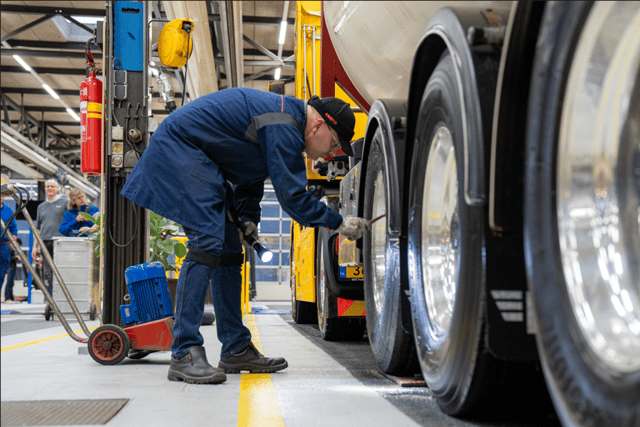
Xsens is especially relevant when approximation is not enough and teams need detailed full-body motion data captured in real working conditions. That makes it a strong fit for specialized ergonomic professionals working in complex environments, where visibility constraints, incomplete data, or AI-based reconstruction may introduce too much uncertainty.
Within that context, Xsens supports different levels of analysis:
- Xsens Ergo Live for real-time ergonomic assessment and immediate reporting
-
Xsens Ergo Expert for deeper post-task analysis, custom workflows, internal models, and more advanced assessment methods
Xsens is ideal for situations where motion data quality is critical to high-stakes decisions that shape employee health outcomes, financial risk, and long-term business success.
Allow the precise data to support your informed decision.