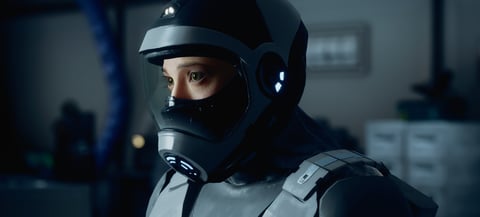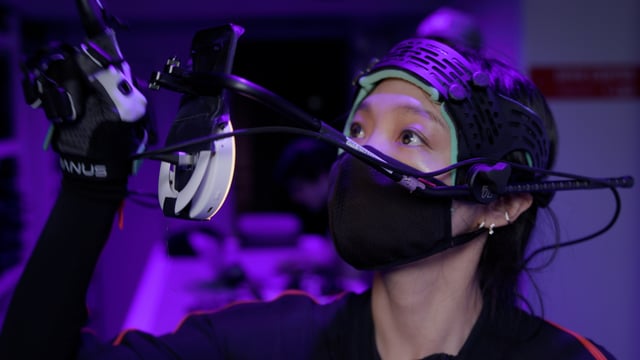
Meet HanaX, a one-person virtual studio
HanaX is a virtual artist, performing live through a digital body in a fully immersive world where experience is no longer bound by reality. She performs as her characters, singing, moving, and expressing in ways that blur the line between physical and virtual presence.
Her work spans multiple platforms. On Twitch, she delivers interactive virtual live concert experiences. On YouTube, she releases cinematic content and music-driven storytelling, powered by tools like Unreal Engine, Blender, and motion capture.
What looks like a full production team is built and performed by one person. Behind the scenes, she operates as a one-person virtual studio, creating stories, building characters and worlds, producing music, and directing cinematic experiences within her own digital environment.
Explore her work at hanax.io
Why VTubing became the perfect medium
HanaX has always been both a performer and a storyteller. Her early on-camera music content performed well, but it felt limiting in bringing her full vision to life. She wanted more than singing on camera. She wanted the freedom to tell stories beyond herself.
VTubing solved that.
It enabled her to step into different characters, tell their stories, and build entire worlds around them. At the same time, it removed traditional production limits. No need for physical locations, large crews, or expensive setups. Instead, she could create on her own terms.
Starting from zero, building a pipeline from scratch
She started from zero, with no 3D or motion capture background. It was challenging, but it also gave her a blank canvas. Drawing from public tutorials and documentation, she built her own approach and designed an efficient, performance-first pipeline.
Motion capture quickly became central to that process.
At first, she experimented with more accessible solutions, including VR and hand-tracking systems. As she became more serious, she moved to a strap-based inertial motion capture setup. It worked well enough to get started, but over time, limitations became clear.
During live streams, small technical issues became very visible. Characters would slowly drift, bodies would twist, and maintaining a stable performance required constant attention.
For recorded content, the problem shifted into post-production. Animations often needed significant cleanup, especially with fingers and body alignment. What started as creative work turned into technical correction.
At the time, she assumed this was simply how motion capture worked.
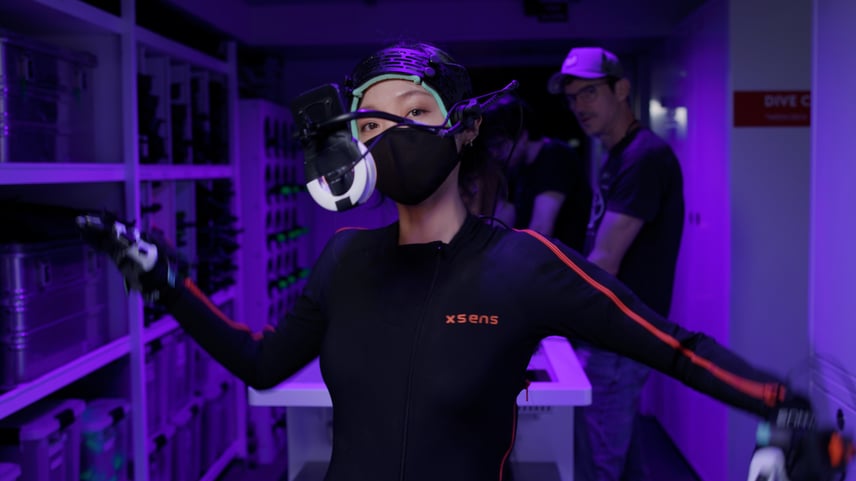
Behind the scenes with HanaX using Xsens Mocap and Manus gloves for OceanX production
The moment everything changed
That changed when she started using Xsens. The difference was immediate. Everything simply worked.
One moment stood out. She could stand in the same position for hours, without drift, without recalibration, without interruption. She did not have to adjust her movement to fit the system. The system matched her. She could just perform.
“It was such a small thing, but it felt incredibly liberating.” — HanaX
It sounds simple, but in a live performance context, it changes everything. The system stopped being something she managed and became something she performed through.
Watch her Xsens unboxing and first impressions.
From fixing problems to creating content
The biggest impact of switching to Xsens was not just better data, it was how it changed her workflow. Before, a significant part of her time went into fixing issues. Animations needed correction, recordings needed cleanup, and technical work often came before creative work.
After switching, that balance flipped. The time previously spent repairing animations could now be used to improve them. Instead of bringing poor data up to an acceptable level, she could focus on making good data even better.
As she describes it, the improvements were incremental, but they added up quickly, and over time, reliability simply became the default.
Supporting creative flow
Another key change was continuity. Creative work depends on momentum, and interruptions, whether from tracking issues or battery limitations, break that flow. Previously, this was a recurring issue. Sensors would run out of power mid-session, forcing retakes or pauses.
With Xsens, that concern disappeared. When you are in a creative flow, you do not want to stop because something technical fails.
That reliability allowed her to stay focused on performance, especially during longer recording sessions or live streams.
Legends Never Die music video created by HanaX using Xsens motion capture
A setup that scales with creativity
Beyond performance, the physical setup also played a role.
Moving from a strap-based system to a full suit changed how she interacted with motion capture. What she initially expected to be less convenient turned out to be the opposite. With sensors integrated into the suit and a unified charging workflow, setup became faster and more consistent.
Support also stood out as part of the experience. During onboarding, she worked directly with Xsens specialists who understood both the technology and the creative challenges behind it.
That combination made it easier to move from setup to production.
Inside HanaX’s performance pipeline
Today, HanaX runs a cohesive, performance-first pipeline, built to capture, render, and deliver in real time.
-
Motion capture with Xsens
- Hand capture with Manus gloves
-
Real-time creation and rendering in Unreal Engine
-
Character creation in Blender
-
Editing in Premiere Pro and After Effects
-
Live, interactive experiences on Twitch
-
Additional tools like Leap Motion and VTubing software, such as Warudo
What makes this setup unique is not just the tools, but how they are used together.
During her live streams, viewers can become part of the performance. They can appear as avatars on stage, dance alongside her, trigger stage effects, or throw virtual elements in real time. This level of interactivity depends on stable, real-time motion capture as a foundation.
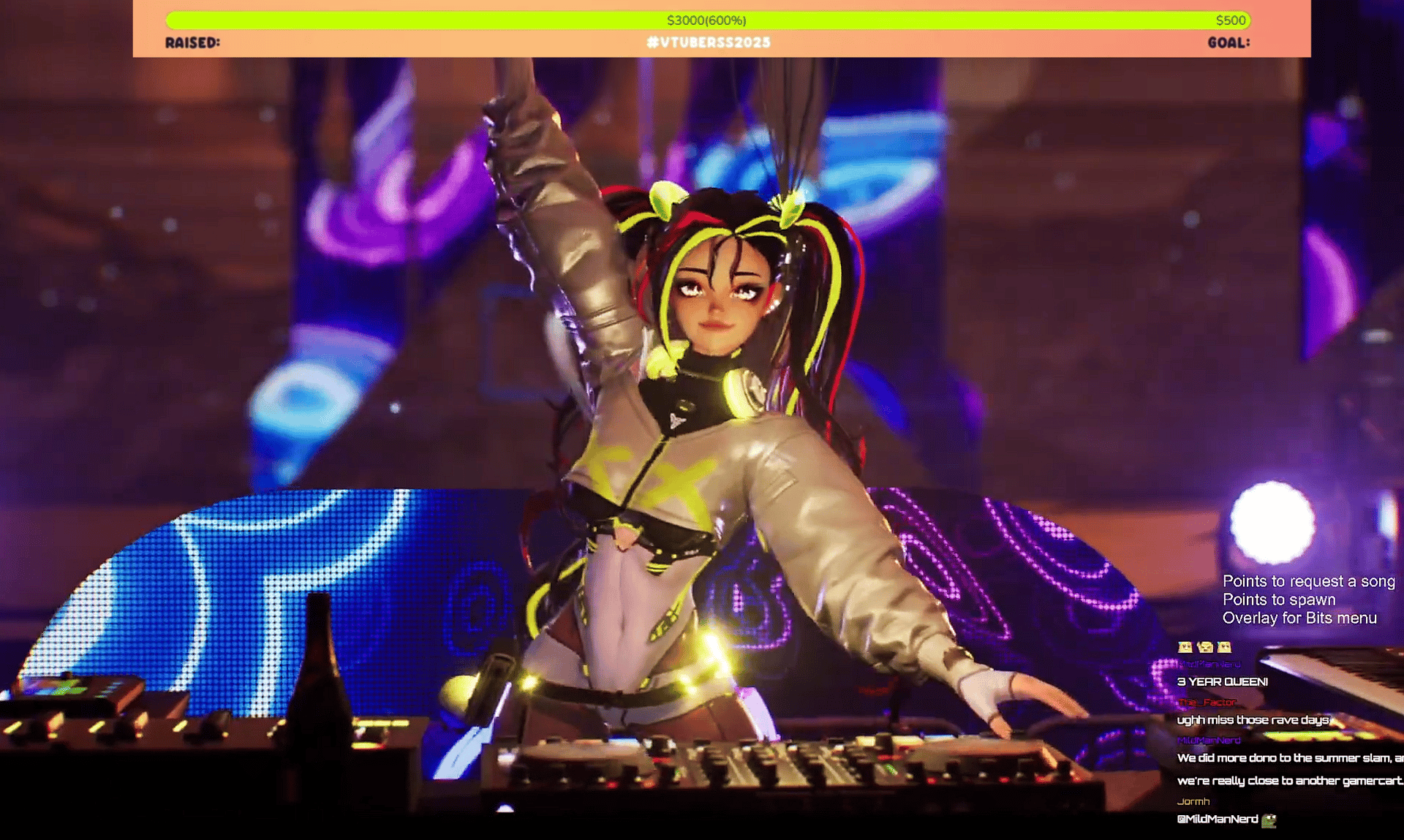
HanaX performing live during a charity event, raising $9,706.96 for children in hospitals, with her virtual character powered by Xsens mocap
Looking ahead
With the foundation in place, HanaX is channeling years of experimentation into more ambitious, performance-driven work, expanding beyond her own universe.
Recent work includes collaborating with OceanX to create their mascot and develop a lore-driven short film, as well as working with other artists on full-band performances. Motion capture remains central, enabling character-driven storytelling and multi-character performance.
Looking ahead, she is developing original music, new collaborations, and larger-scale virtual productions, continuing to push real-time performance forward.
And she is only just getting started.
A workflow built for creativity
For HanaX, switching to Xsens was not just about improving motion capture quality.
It changed how she creates.
By removing technical friction, it allowed her to focus on performance, storytelling, and continuous improvement. What started as a workaround-driven process became a reliable, scalable workflow.
And for a one-person studio, that difference is everything.
“It just works. You don’t notice it anymore, because everything works.” — HanaX
Want to build your own VTuber or virtual production pipeline?
Discover how Xsens helps professionals capture high-quality motion anywhere, with less setup and more control.