How a lean indie studio uses inertial motion capture to move faster, iterate more, and deliver cinematic realism.
For many indie studios, character animation becomes a compromise between quality, time, and budget. Empty Vessel set out to avoid that compromise.
Founded by experienced AAA developers and operating as a small, agile team, Empty Vessel is building DEFECT, a cyberpunk squad-based immersive objective shooter where tension, realism, and cinematic presentation play a central role. From the earliest stages of development, the team knew that believable human motion would be essential to making the experience work.
To achieve that level of quality without the overhead of traditional motion capture pipelines, Empty Vessel built its animation workflow around Xsens inertial motion capture.
Empty Vessel & DEFECT
Empty Vessel is a studio formed by developers with backgrounds at studios such as Naughty Dog, id Software, and BioWare. Team members have previously worked on major franchises including Uncharted, The Last of Us, Doom, and Call of Duty.
Today, the studio operates with a lean team of around 17 developers. The goal is not to replicate the scale of AAA production, but to deliver experiences that feel just as polished, while remaining flexible and efficient.
That philosophy is reflected in DEFECT.
Set in a dystopian cyberpunk future, DEFECT is a squad-based immersive objective shooter where four teams compete in the same match, each pursuing different objectives. Players can take on the role of authoritarian enforcement units or powerful gang factions, navigating dense environments filled with both AI-controlled enemies and other players.
The gameplay emphasizes tactical tension. Movement is deliberate, communication matters, and every corner carries uncertainty. Even in competitive multiplayer modes, PvP encounters are layered with PvE elements, forcing players to constantly assess risk and adapt.
Immersion is a core design pillar. Rather than relying on a traditional HUD, DEFECT keeps interface elements out of the way wherever possible. Menus exist directly in the world, presented as an in-game PDA that the character physically interacts with. Objectives unfold through voice-over and environmental cues, supporting a cinematic experience that emerges naturally from gameplay rather than scripted cutscenes.
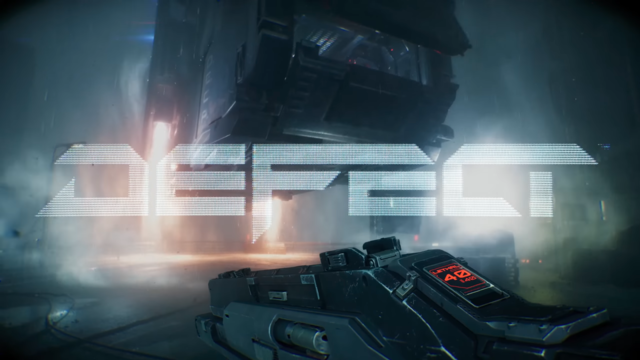
Gameplay reveal from DEFECT by indie studio Empty Vessel.
Animation challenges at indie scale
For a small studio like Empty Vessel, animation quality quickly becomes a pressure point. Realistic human motion is time-consuming to create, and traditional motion capture pipelines often introduce long delays between capture and usable data.
Rico Flores, Animation Director at Empty Vessel, has spent his career working with both high-end optical motion capture and more budget-conscious setups. While optical capture delivers strong results, it often comes with turnaround times that do not fit a lean production model.
“From shoot day to actually getting usable data back, it can take weeks or even months,” Flores explains. “That makes iteration slow, especially when you’re still figuring out how something should feel in the game.”
For DEFECT, where moment-to-moment gameplay, pacing, and tension are constantly evolving, that lack of speed was a problem. The team needed a way to prototype quickly, test ideas immediately, and refine performances without burning time or budget.
Why Empty Vessel chose Xsens
Flores had already introduced Xsens at a previous studio and saw firsthand how it changed the way animation teams could work. When Empty Vessel was formed, the decision was clear.
“Once I got a taste of Xsens and how much I could produce with it, I knew that for my next company we were going to go Xsens right out of the gate,” he says.
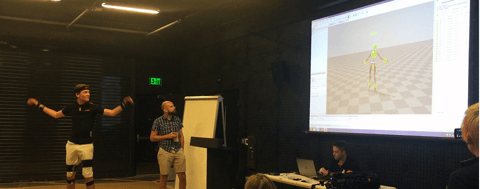
Xsens allowed Empty Vessel to bring motion capture fully in-house. Instead of scheduling external shoots and waiting for results, the team could capture motion whenever it was needed and see results almost immediately.
“I can shoot something today, see it in a few hours, and have it on my character the same day,” Flores says. “If something is a priority, I can literally go to my garage, capture it, and get it into the game.”
That speed fundamentally changed expectations around animation production.
Building DEFECT’s animation pipeline
Xsens sits at the core of DEFECT’s animation workflow. The system is used to capture a wide range of character motion, from traversal and combat movement to environmental interactions and everyday actions.
Much of this work is done internally by Flores himself, allowing the team to iterate rapidly without relying on external resources.
“If we want to test something, I’ll capture it quickly, throw it into the game without heavy cleanup, and see how it feels,” he explains. “If it works, I polish it. If it doesn’t, we move on. That might only be a few hours of work.”
This approach allows Empty Vessel to experiment freely. Animations are no longer a bottleneck that slows down design decisions. Instead, they become part of the creative process, supporting rapid prototyping and refinement.
For more specialized performances, such as complex stunts or highly trained combat movement, the team occasionally supplements its pipeline with optical motion capture.
“A lot more animation than people think is just general motion,” Flores says. “Walking, interacting with objects, pulling a weapon, using a lever. All of that can be done quickly with Xsens, without needing a full studio shoot.”
In-house Xsens motion capture shown alongside DEFECT gameplay.
Clean data and faster polish
Beyond speed, data quality was a key factor in adopting Xsens. According to Flores, one of the most time-consuming aspects of animation cleanup is removing jitter and noise from motion data.
“That was always one of the toughest parts,” he says. “With Xsens, the data is clean. I rarely have to deal with jitter, so I can focus on polishing the performance instead of fixing curves.”
The result is a workflow where captured motion is usable almost immediately, with significantly less cleanup required before it can be refined and finalized.
Punching above indie weight
For Empty Vessel, investing in motion capture was not just about efficiency. It was a strategic decision to stand out in a crowded indie market.
Many smaller studios rely heavily on marketplace animation assets, which can limit originality and visual identity. By building a real motion capture pipeline, Empty Vessel was able to push DEFECT’s animation quality beyond typical indie expectations.
“When you look at DEFECT, you can actually compare it to AAA projects,” Flores says. “We’ve been able to punch above our weight by using an AAA-style mocap pipeline at a much lower cost.”
Animation plays a major role in that perception. Realistic motion supports immersion, reinforces tension, and helps DEFECT feel grounded and believable, even in its cyberpunk setting.
Empowering small teams
Xsens has also had a direct impact on team structure. With the right tools in place, a single animator can produce work that would traditionally require a much larger department.
“It’s empowered me to do the work that, at other studios, would need more people,” Flores explains. “Whatever the game needs, I can make it.”
While motion capture is an investment, Flores sees it as a long-term cost saver.
“If you have someone who understands the technology, it pays for itself over time,” he says. “Especially for an indie studio.”
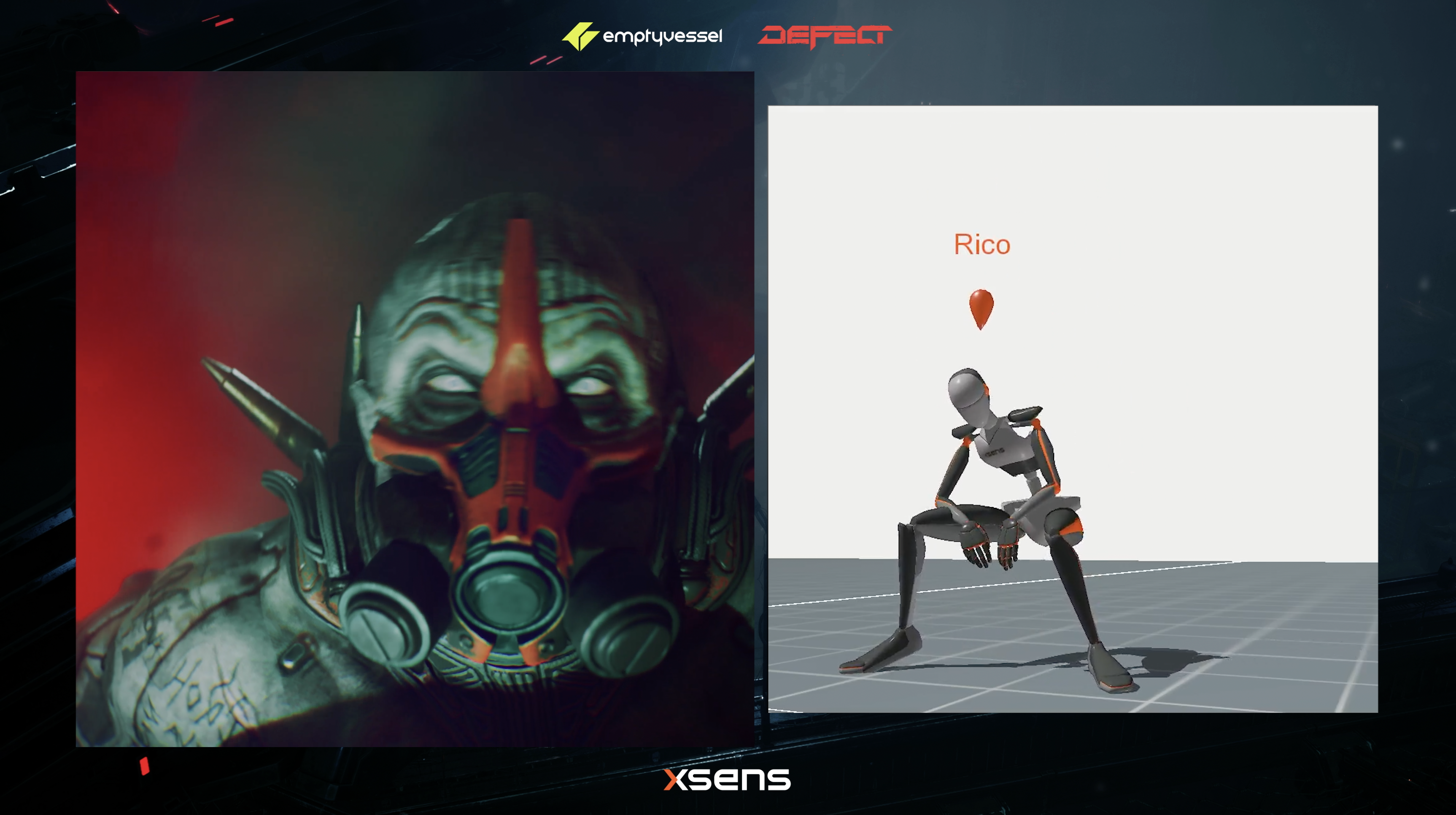 Xsens motion capture applied directly to DEFECT characters.
Looking ahead
As DEFECT continues development, Xsens remains a central part of Empty Vessel’s production pipeline. The flexibility to capture motion quickly, iterate freely, and maintain high quality allows the team to keep refining the experience without slowing momentum.
For indie studios aiming to deliver realistic character motion and cinematic presence without AAA overhead, Empty Vessel’s approach shows what is possible with the right tools and mindset.
DEFECT is currently in development.
Players can wishlist the game on Steam to follow its progress and upcoming updates.
Interested in how indie studios achieve AAA-quality character animation with Xsens?
Explore the Xsens Indie Program and discover how inertial motion capture fits into lean game development pipelines.