Humanoid robot training increasingly relies on a straightforward pipeline: capture human motion, retarget it to the robot, train at scale in simulation, deploy to hardware, then iterate. This is what Boston Dynamics demonstrated in their interview with CBS's 60 Minutes.
CBS's 60 Minutes aired its in-depth report on the development of humanoid robots for real-world deployment in manufacturing environments.
They went inside Boston Dynamics AI Lab to show how a humanoid learns a new movement, scales it in simulation, and then brings that skill back to the real robot.
The segment follows Boston Dynamics’ latest Atlas humanoid as it prepares for real work at Hyundai’s new factory near Savannah, Georgia: a facility where robots and people already operate side-by-side at scale.
What stood out wasn’t just Atlas moving. It was the training loop behind the movement.
The pipeline, end-to-end
The workflow shown on-screen is the pattern more and more humanoid teams are converging on:
Capture human motion → Retarget to the robot → Train at scale in simulation → Deploy to hardware → Repeat
Here is how it is done step by step:
Step 1. Capture: turning human movement into training data
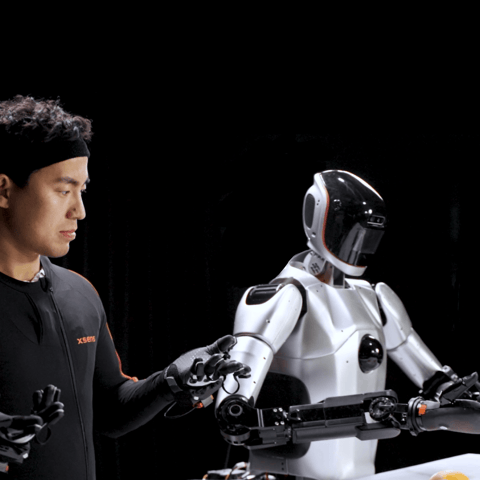
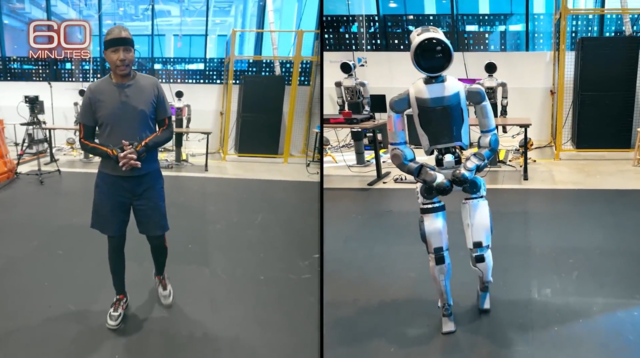
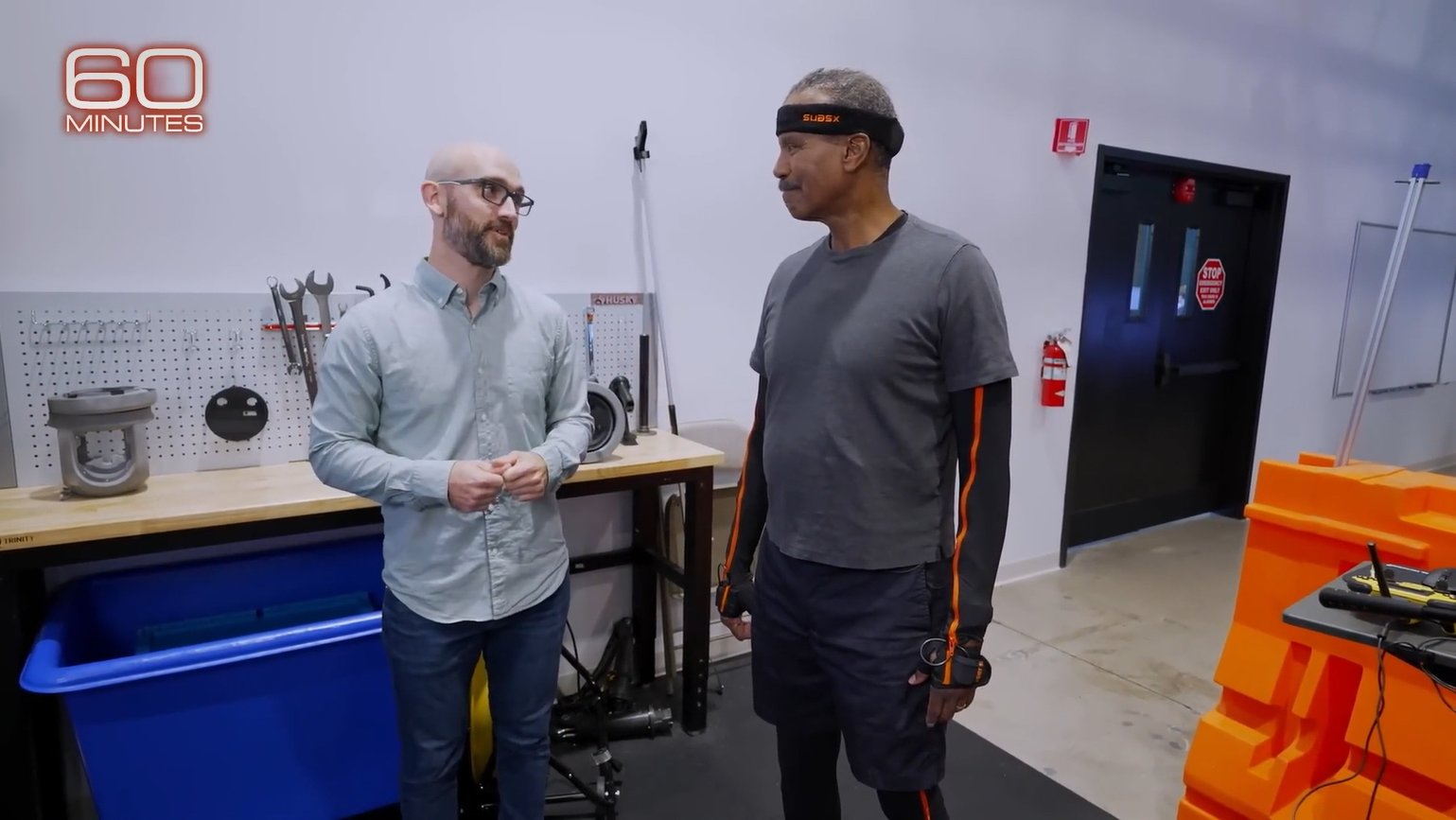
In the segment, Bill Whitaker wears Xsens motion-capture suit to record full-body movement. That captured motion becomes the reference behavior.
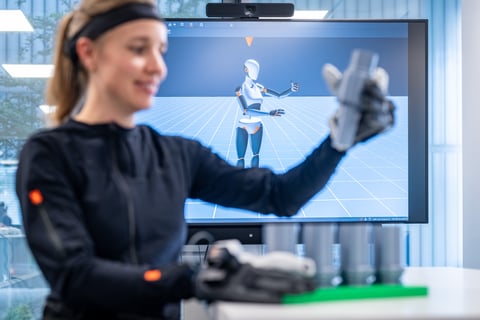
Humanoid learning starts with good data. When you capture a movement cleanly (joint angles, timing, coordination) you get a reproducible reference that can be reused, iterated, and expanded into many task variations.
In the segment, Bill Whitaker wears Xsens motion-capture suit to record full-body movement. That captured motion becomes the reference behavior.
Why this matters:
- It compresses “how a human does it” into something a robot pipeline can reuse
- It creates a ground truth for timing and coordination
- It provides consistent demonstrations for learning systems
Step 2. Retarget: mapping human kinematics to robot constraints
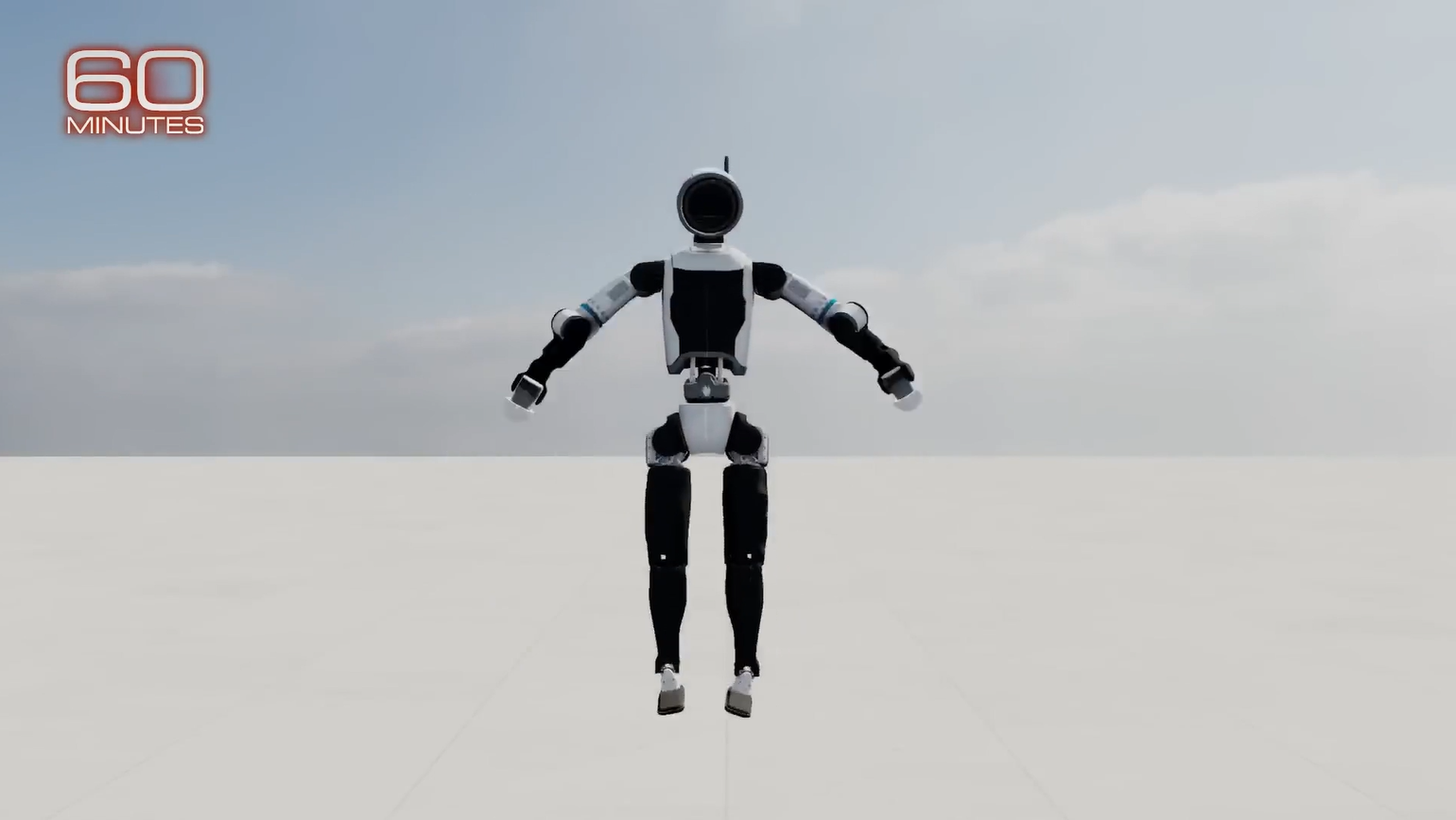
Atlas is not built like a person. Different limb proportions, different joint limits, different actuation. The human motion cannot be copied 1:1.
In the video, the Boston Dynamics team explains that they had to teach Atlas to match the motion virtually, because its body is different from the human demonstration.
Retargeting is where motion becomes robot-ready:
- aligning frames and joint movements
- enforcing joint limits and balance constraints
- translating human intent into robot trajectories
Step 3. Train at scale in simulation: thousands of robots, fast iteration
Using the motion capture data, Boston Dynamics scales the learning in simulation with more than 4,000 digital Atlas robots trained in parallel for six hours.
Then they add variability like slippery floors, inclines, and stiff joints, forcing the learned behavior to adapt instead of memorizing a single ideal condition.
This is the core advantage of simulation:
- learn faster than real-time
- explore edge cases safely
- improve robustness before touching hardware

Step 4. Deploy to hardware: one trained skill, many robots
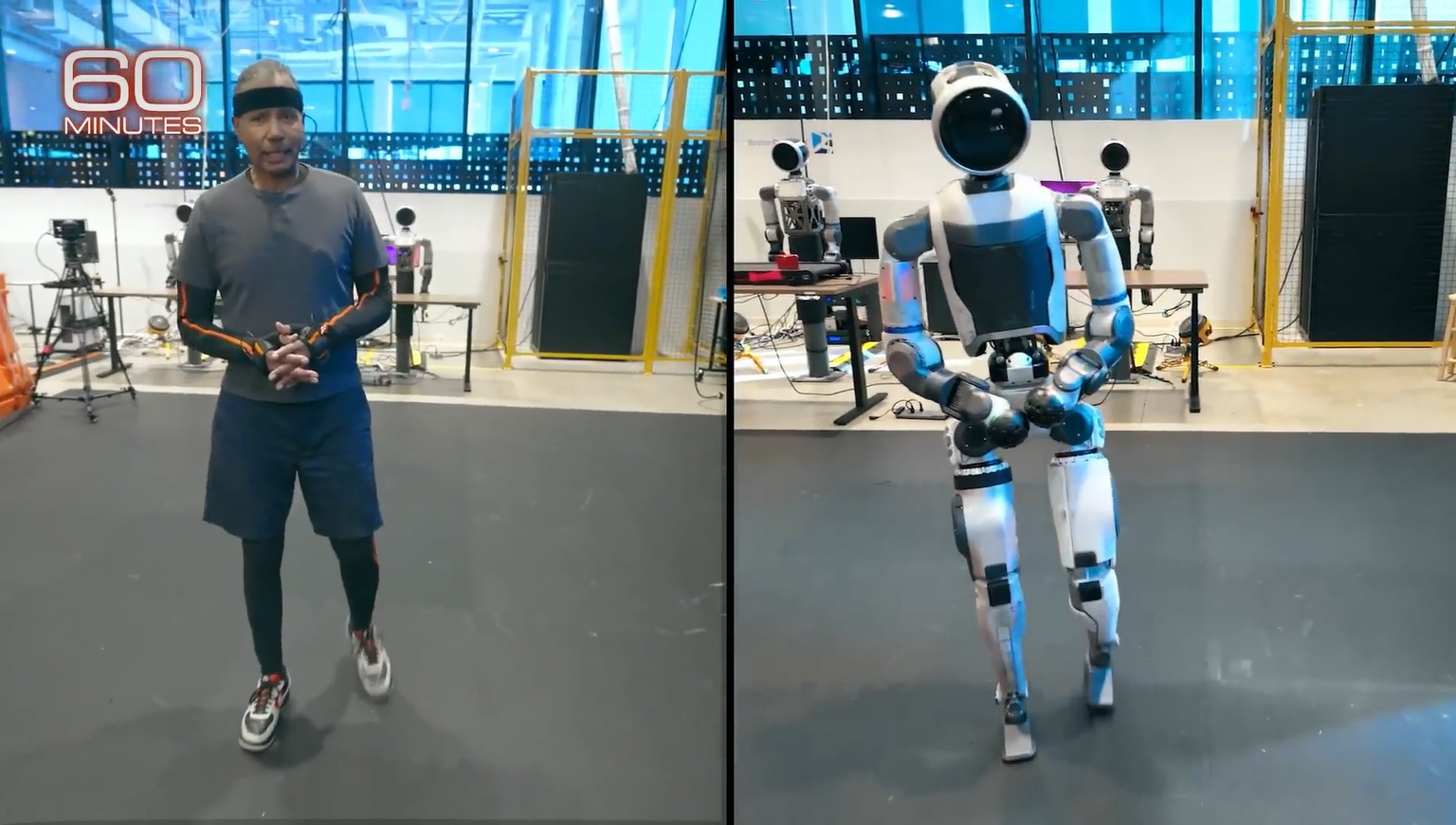
Once the behavior is learned, it can be transferred to the real robot, and, importantly, reiterated and reused.
That’s how humanoid work scales:
- capture once
- train and improve in simulation
- deploy across a fleet
- keep iterating as environments change
Why this matters now: Atlas is moving into real factories
The story is framed around a real manufacturing context: Boston Dynamics was invited to show Atlas’ first real-world test at Hyundai’s new plant near Savannah.
The factory itself is already highly automated, with 1,000+ robots alongside nearly 1,500 humans, and Atlas is positioned as the next step: a flexible worker for tasks that don’t justify custom automation.
This is exactly where the capture → retarget → simulate → deploy loop using Xsens motion capture becomes a competitive advantage:
- faster time-to-task for new workflows
- fewer brittle “one-off” robot programs
- better performance under real-world variability
What this means for humanoid teams using motion capture
If you are building humanoids for industrial environments, motion capture is the bridge between human competence and scalable robot learning. This is how Xsens powers humanoid robot development:
- Demonstrations that ML systems can learn from
- Repeatable movement references for simulation
- A faster path from idea → behavior → deployment
- A feedback loop where every new capture can become a new skill
Learn more about robot motion training with Xsens.